



Did Soccer Originate in China?
Ancient Roots of the World’s Most Popular Sport
Ad
From Cuju to the Modern Game: China’s Long Football Story
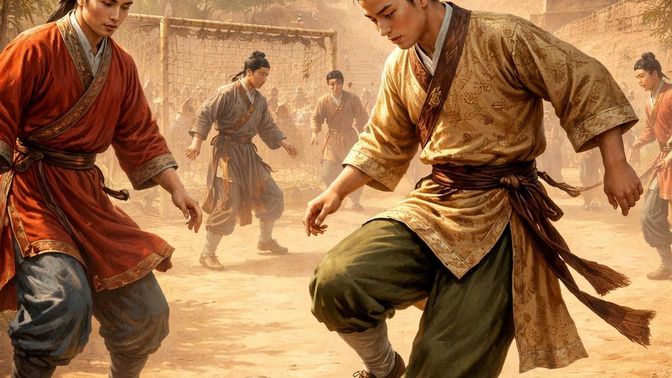
Football in China didn’t start with stadiums or global leagues. It started more than 2,000 years ago with a game called Cuju — often described as one of the earliest forms of football in history.
Back then, Cuju was played in places like ancient Linzi and even used as part of military training. The name itself is straightforward: “Cu” means to kick, and “Ju” refers to a leather ball. The earliest versions of the ball were simple — leather filled with hair — later replaced by animal bladders to improve movement and playability.
Even the idea of a goal existed. Known as the “elegant eye,” it was basically a net suspended between bamboo poles. Simple, but surprisingly close to what we recognize today.
Cuju wasn’t just one fixed game. Some versions were more casual and focused on skill and performance, sometimes even played with music. Others were more competitive, featuring teams, goalkeepers, and structured rules — though physical contact was still part of the game. At its peak, it was popular enough to be played in royal courts, with emperors supporting teams during major celebrations in cities like Chang’an (modern Xi’an).
Modern football: one World Cup and a bigger ambition
Fast forward to today, and China’s football story looks very different. The national team has only qualified for one World Cup — in 2002, when Japan and South Korea hosted the tournament. China didn’t manage to get past the group stage, losing all three matches and failing to score.
That result became a turning point.
In 2015, Chinese authorities launched an ambitious national plan to transform football across the country. The goal wasn’t just short-term improvement, but building a long-term system capable of producing elite players.
The focus areas included expanding football in schools, improving coaching standards, and building thousands of training academies and facilities. The broader vision was bold: encourage tens of millions of people to play football regularly and strengthen the sport from the grassroots up.
The Super League boom and correction
Around the same time, the Chinese Super League gained global attention for a different reason — spending power.
High-profile players such as Oscar, Hulk, Carlos Tevez, and Ezequiel Lavezzi joined clubs in China, alongside well-known international coaches. Salaries and transfer fees rose sharply, and the league briefly became one of the most talked-about destinations outside Europe.
However, the rapid rise came with concerns over financial sustainability and long-term planning. In response, authorities introduced tighter regulations, including higher taxes on foreign transfers and limits on the number of foreign players allowed in teams.
The shift marked a clear change in strategy: away from short-term star signings and toward domestic development.
Building from the base
Today, the emphasis in Chinese football is firmly on youth development. Football academies have expanded rapidly, and school programs have become more structured. Some initiatives even send young players abroad for training experience.
The idea is simple but long-term: develop talent early, improve coaching quality, and gradually raise the standard of domestic football.
Looking ahead
China’s football journey is still very much in progress. The national team has not yet reached consistent international success, but the foundation is being rebuilt.
From ancient Cuju fields to modern academies and stadiums, the connection is clear — football has always been part of China’s story. The difference now is scale, structure, and ambition.
Whether that long-term project delivers results will only be seen in the years ahead.
Written by
April 12, 2026