



Why China’s Matchmaking Industry Is Booming
Love, Tradition, and Modern Pressure
draft
Ad
China’s matchmaking industry is experiencing a powerful resurgence—especially among middle-aged and elderly citizens—driven by a complex mix of demographic change, cultural expectations, and the emotional realities of modern life.
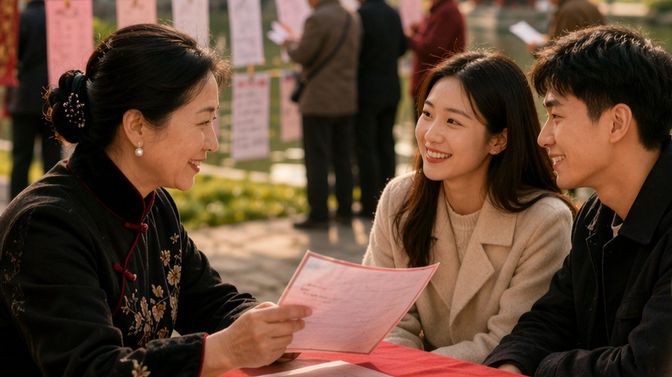
On a winter afternoon in Shanghai, pensioners gather not in parks alone but even inside furniture store cafeterias, turning everyday public spaces into informal matchmaking hubs. Meanwhile, online, a different kind of meeting place thrives: livestream dating sessions where older singles introduce themselves with striking honesty—listing age, family situation, finances, and expectations with the clarity of a job interview.
These scenes illustrate a broader transformation. Matchmaking in China is no longer confined to traditional family arrangements or discreet introductions. It has evolved into a dynamic, hybrid ecosystem combining digital platforms, community events, and entertainment media.
Loneliness and the “Silver Economy”
At the heart of this boom lies a growing aging population and a widespread sense of loneliness among seniors. Many older adults—widowed, divorced, or never married—are actively seeking companionship later in life. Unlike younger generations, their goals are often pragmatic: emotional support, stability, and shared daily life.
Industry observers estimate that around 30 percent of matchmaking demand now comes from people aged 55 and above. This demographic is also less likely to relocate, meaning local matchmaking services—both online and offline—have become especially important.
Entrepreneurs have taken notice. New services tailored to seniors combine dating with social activities: group meals, games, singing, and outings. These experiences blur the line between matchmaking and community-building, offering not just romantic prospects but also relief from isolation.
Technology Meets Tradition
Livestream matchmaking has emerged as one of the most notable innovations. Hosts run nightly sessions where participants briefly present themselves on camera, sometimes to hundreds of viewers. The format emphasizes transparency—faces must be shown, and personal details are openly discussed.
This digital approach reflects a shift in how older generations engage with technology. Once seen as less tech-savvy, many seniors now actively use social media platforms to expand their social circles. For some, even watching these livestreams provides comfort and a sense of belonging, regardless of whether they find a partner.
At the same time, offline traditions persist. Public parks across Chinese cities continue to host matchmaking corners, where handwritten profiles are displayed and discussed. The coexistence of these old and new methods highlights how cultural practices are adapting rather than disappearing.
Media Spotlight on Late-Life Love
The growing visibility of senior romance is also evident in television and online shows. Programs focusing on older participants attempt to normalize dating later in life, though not always successfully.
Some shows adopt youthful dating formats, featuring polished, affluent contestants in stylized settings. Critics argue these portrayals lack realism and fail to resonate with ordinary viewers.
In contrast, more grounded programs have gained popularity by embracing authenticity. These shows often include candid, sometimes blunt conversations about health, finances, and compatibility—topics that are central to older adults but rarely addressed so directly in mainstream dating content.
The appeal lies in their honesty. Viewers, especially younger ones, are drawn to the unfiltered interactions, which challenge stereotypes about aging and romance.
Cultural Expectations and Emotional Needs
Underlying the industry’s growth is a deeper cultural shift. Traditionally, marriage in China has been closely tied to family duty and social stability. While younger generations increasingly delay or avoid marriage, older generations still carry strong expectations about partnership and companionship.
However, their approach is changing. Many seniors today are less willing to compromise or “settle” than in the past. They seek compatibility and mutual respect rather than simply fulfilling social norms.
This shift reflects broader societal changes: increased life expectancy, improved financial independence among retirees, and a growing recognition of emotional well-being as a legitimate need at any age.
A Market with Momentum
As China continues to age, the demand for senior-focused matchmaking services is expected to grow. What was once a niche segment is now a significant part of a rapidly expanding industry.
More importantly, the rise of this sector signals a cultural awakening. The romantic and emotional lives of older adults—long overlooked or even stigmatized—are finally entering public conversation.
In the end, the matchmaking boom is about more than finding partners. It is about redefining what it means to age in modern China: not as a period of decline, but as a stage of life where connection, companionship, and even new beginnings remain within reach.
Written by
April 12, 2026